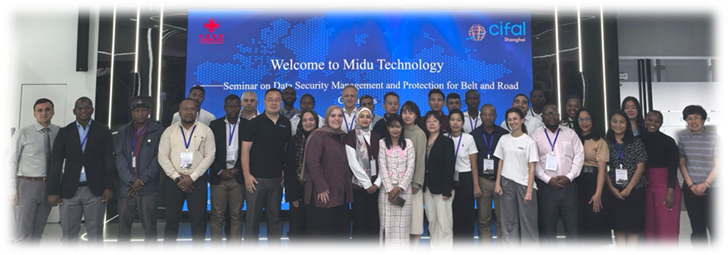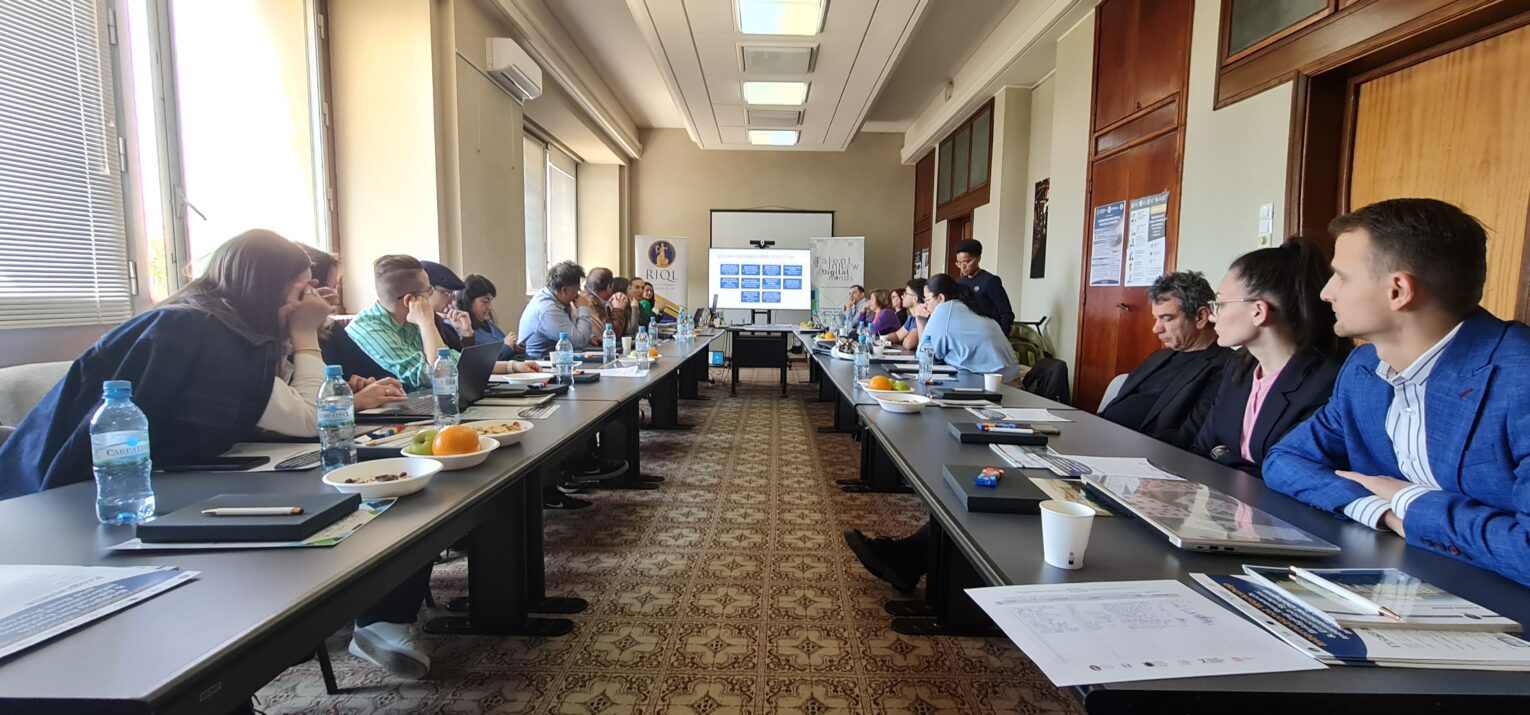
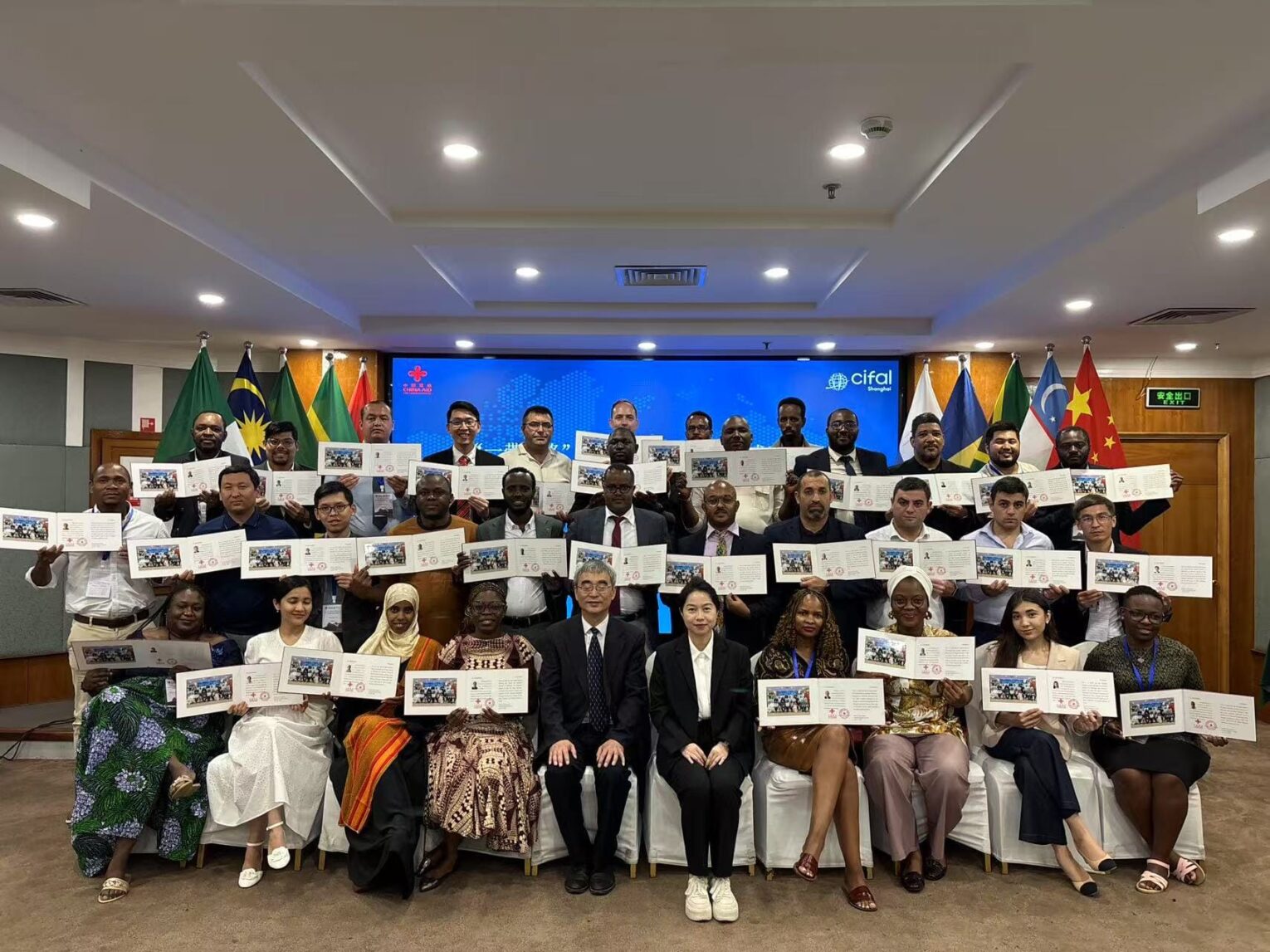
In early July 2025 I had the privilege of joining an international seminar in Shanghai on Blockchain and Information Security for Belt and Road countries. Hosted by China’s Ministry of Commerce and undertaken by the CIFAL Shanghai training centre, the two-week program (July 2–15, 2025) brought together 33 officials and experts from nine countries (including Armenia, Gabon, Malaysia, Nigeria, and Romania, among others). CIFAL Shanghai – an “International training center for governments and leaders” – is affiliated with the United Nations Institute for Training and Research (UNITAR). Its mission is to strengthen international cooperation and capacity-building in ICT and urban development. In fact, China’s Ministry of Commerce often sponsors such China-aid training courses, and this was the 4th one run by CIFAL Shanghai in 2025. I was invited as Romania’s representative (nominated by the Romanian Academy’s research institute, ICCV) with the support of the Chinese Embassy in Bucharest – a scholarly honor that underscored our interdisciplinary commitment to technology and governance.
Two weeks of deep learning and cultural exchange
The seminar was rich in both technical content and cultural immersion. In packed sessions, we explored blockchain technology, cybersecurity, artificial intelligence, digital currency, and related legal and regulatory frameworks. Lectures highlighted China’s own blockchain developments and broader ICT advances. As Chinese press reports noted, speakers shared cutting-edge developments in big data, the Internet of Things, cloud computing and AI, and how these integrate with blockchain for information security. We learned, for example, how China uses blockchain to enhance cybersecurity and trust in digital finance, and debated privacy-versus-transparency trade-offs in smart contracts. The program also included industry visits – we toured labs and tech hubs, and country presentations, where each of us drafted a “country paper” analyzing blockchain in our homeland and lessons from China.
Beyond the classroom, CIFAL’s goal was cross-cultural exchange. The orientation materials explicitly encouraged us to “get a real image of developing China” and emphasized respect for different cultures. We even had basic Mandarin lessons and discussions of Chinese social values. Cultural excursions included stops in historic cities: Changsha, capital of Hunan province, famed for its fiery cuisine, centuries-old academies and temples, and a vibrant tech-energy scene; and Hangzhou, an iconic blend of nature and innovation. Hangzhou’s West Lake and tea culture mingled with its modern skyline – “a harmonious mix of nature, heritage, and innovation”. One official guidebook poetically described Shanghai as “where the future meets tradition in a dazzling dance of neon-lit skyscrapers, hidden tea houses, and soup dumplings that taste like poetry”. These experiences brought the theory home: we witnessed how ancient and modern China dance together – an ambience of “respect, discipline and mutual learning” that spoke to CIFAL’s training mission.
Three pillars of Blockchain wisdom: DO, Unity, Connectivity
As an author of a recent book on blockchain governance, I was struck by how these themes evoked Chinese classical philosophy. Indeed, the seminar inspired me to reflect that blockchain is more than tech, it mirrors deep human values. Blockchain networks embody transparency, decentralization and trust, principles that Chinese thinkers have long embraced. Confucius taught that social order comes from personal virtue and righteousness, not from coercion. Key Confucian virtues –ren (benevolence), yi (righteousness), li (propriety) – resonate with blockchain’s ethos. Like Confucius’s ideal “way of the gentleman” (君子) who leads by moral example, blockchain asks each node (or “good person” in society) to uphold honesty and share the ledger openly. Indeed, blockchain is “not just technology, but a mirror of our collective values,” reflecting fundamental democratic ideals of transparency, collaboration, and accountability. As my book notes (Fitzek, S., Blockchain and Political Transparency), those who dare to codify these principles into systems will help build a fairer society.
A second pillar I call Unity. Mencius, the great Second Sage after Confucius, argued that “human nature is essentially good” and that righteous governance brings collective flourishing. Similarly, blockchain invites a positive view of society: if we trust each other’s stake in the network, we co-create value. The DAO/Chinese parallels paper argues that decentralized autonomous organizations (DAOs) can be guided by a kind of wúwéi (non-coercive harmony). In Daoist philosophy, wu wei means letting a system’s own “Way” (Dao) emerge without heavy-handed control. Blockchain’s design reflects this: it operates by algorithmic “consensus” rather than central fiat, much as Laozi’s Daodejing teaches that the best rulers lead so subtly that people hardly notice. (In fact, Daodejing literally means “Classic of the Way and Virtue,” emphasizing harmony with nature.) By removing the need for intermediaries, a transparent ledger expands our collective trust network so society can function more smoothly, a realization of Mencius’s vision of a morally attuned polity.
The third pillar is Connectivity. We are all nodes in a global system. Chinese sages spoke of an “All-Under-Heaven” (天下) – an ancient concept of unity that blockchain can help realize. Laozi’s Daoist notion of connecting to the natural flow invites seeing humanity as an integrated web. The seminar vision of blockchain as a planetary ledger reminds me of the futurist Nicolai Kardashev’s idea of a Type I civilization – one that harnesses all planetary energies and information. A world at Type I would be a single global society, able to share knowledge instantly. Blockchain can be a first step on that path: by creating a secure, transparent “neural network” of data across cultures, it lays the digital infrastructure for unity. In this sense, “before we build systems of prosperity, we must first build roads,” as the Chinese proverb goes. Xi Jinping himself said it plainly: “building roads is the first step to prosperity.” Here, the “road” is not pavement but shared understanding, and blockchain could be the road that connects our communities.
China’s cultural leadership in technology
The seminar underscored that China’s leadership in digital infrastructure comes not just from flashy innovation but from deep cultural roots. Confucian work ethic, diligence, respect for learning and authority, and communal responsibility, has long driven China’s development. In our discussions, Chinese lecturers often wove in aphorisms about collective good. One told us that even simple acts of courtesy (礼, li) in governance can ripple outward in trust. This emphasis on respect and harmony felt authentically Confucian. At the same time, the Daoist strain, valuing balance, long-term thinking and humility, pervades China’s tech ethos too. During a site visit to a Shanghai university lab, a professor quoted Laozi: “A journey of a thousand li begins with a single step.” He linked it to China’s iterative approach to innovation: small consistent improvements (wu wei), not reckless leaps.
China’s Belt and Road Initiative itself is a modern echo of the old Silk Road – a literal and metaphorical push to connect. I was struck by how seamlessly my technical seminars coexisted with cultural lessons. Between lectures on smart contracts, we practiced basic Chinese greetings. The cultural instructor explained concepts like guanxi (关系, relationships) and xiao (孝, filial piety) to illustrate why interpersonal trust matters. These sessions made clear that behind every high-tech application there are people with values. As the CIFAL program brochure notes, part of the aim was to “strengthen traditional friendship, foster diplomacy, and get a real image of developing China”. I certainly left with such an image, of a nation that blends innovation with its philosophical heritage.
At home in Romania, I see these lessons as vital. In my own writing on blockchain governance, I’ve argued that transparency can reshape institutions to be more accountable and humane. Attending the seminar reaffirmed that view: by reducing opacity, blockchain can force a kind of honesty once only preached in ethics books. Just as Mencius taught that good governance helps citizens naturally become better, blockchain helps align incentives so that cheating is hard and serving the public interest is baked into the code. My book’s case studies – on digital voting and anti-corruption systems, found that distributed ledgers can restore citizen trust. Here in China, everyone from local officials to entrepreneurs spoke of wanting to “share the benefits of the digital economy” broadly. There was a sense that in the coming era, technology should humanize rather than dehumanize policy.
Tribute to a shared vision
As our two weeks in China came to a close, I felt both humbled and uplifted. The seminar embodied a spirit of global community and learning. Participants from Africa, Europe, Asia and beyond found common ground discussing AI ethics one moment and Chinese tea ceremonies the next. It reminded me that today’s problems, from cybersecurity to pandemic response, transcend borders, and we need each other’s wisdom. Indeed, blockchain itself is a kind of metaphor for this cooperation: it requires many honest actors, in many places, to operate smoothly.
In the end, I left Shanghai convinced that the Belt and Road is as much a bridge of ideas as of trade. China, with its millennia-old culture of scholarship, is showing leadership not just by building high-speed rails but by exporting knowledge. The deep roots of respect, discipline and learning I saw here may turn out to be as important as Chinese-made chips or software. As Confucius said, “learning without thought is labor lost; thought without learning is perilous.” This seminar was fertile ground for both.
Returning home, I reflect on the three pillars we discussed, DO (mindful action), Unity, Connectivity, not just as abstract ideals but as practical guidelines. If blockchain can encourage ren and yi, it will honor Confucius. If it can operate with wu wei humility and flexibility, it will honor Laozi. And if it helps knit a tianxia of cooperation, it will honor Mencius. In that spirit, I pay tribute to this seminar and to China as a visionary nation building the digital bridges of tomorrow. May we all walk these new roads together, scholars and policymakers alike, toward a safer, more connected world.
Dr. Sebastian Fitzek (16 July 2025)